


In January 2018, the Iranian regime ordered the demolition of another cherished artefact of Ahwazi heritage in the occupied Arab region of Ahwaz.Ahwazi activists reported that regime authorities ignored petitions submitted by local residents pleading with them not to destroy the 98-year-old cinema in Dar Khwain city to the west of the regional capital, with regime security forces, assisted by municipality officials, using bulldozers to raze the historic building. The cinema was established for the area’s people in 1920 on the orders of Sheikh Khazal Al-Kaabi, the last Arab ruler of Ahwaz who was deposed in Iran’s 1925 annexation of the then-autonomous Arab emirate, with even the Iranian regime’s own heritage agency listing it as a historic site to be protected. Unfortunately, as has been the case since the 1925 annexation and occupation—supported by the then-British empire—successive Iranian regimes have worked tirelessly to erase the Arab cultural heritage and landmarks of the Ahwazi people. This is part of a larger, colonialist effort to suppress and erase their Arab identity, history, and existence.
The destruction of the beloved cinema was simply another expression of Iran’s policy of colonialism aimed at forcibly assimilating the Ahwazi people, even whilst treating them as fifth-class citizens and denying them the most basic rights on the basis of their Arab ethnicity. This official sabotage has also seen the vandalism or wholesale destruction of many other sites of historic interest in the region, with others deliberately allowed to fall into disrepair and collapse. These sites include the palaces of Prince Khazal in Muhammarah, Hamidiyeh, and the regional capital Ahwaz.
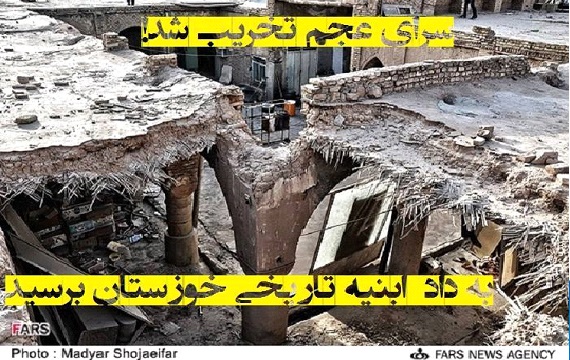
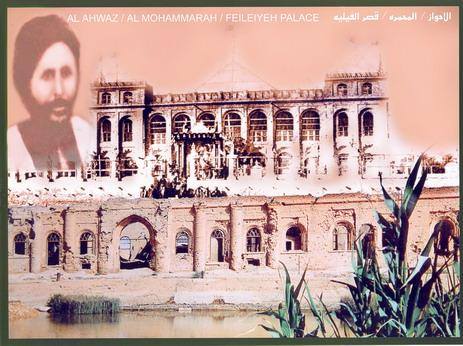 In November 2010, the regime’s infamous Islamic Revolutionary Guards Corps demolished the Filya [Feiliyeh] palace overlooking the Shat al-Arab waterway near Muhammarah, which dated back to 1917. Two years later, in 2012, another palace established by Prince Khazal in Hamidiyeh was bulldozed, and in July 2013, the regime ordered the demolition of the Saray Ajam palace, located in the capital city of Ahwaz. This building had been registered as a site of special historic interest by the regime’s heritage agency, with Ahwazi activists calling on international bodies such as UNESCO to take firm action to prevent further destruction of irreplaceable antiquities.
These acts are part of Iran’s colonialist agenda to obliterate the Arab identity of the once-autonomous region, effectively attempting to erase Ahwazi history. Many Ahwazis believe that an unofficial battle has been ongoing since the late 19th century to reinstate the Persian Empire in their land before expanding further across the region.
For Ahwazi people, this is an existential fight for their culture, heritage, and identity against an encroaching ethnocide; as with other totalitarian regimes, Iran’s leadership relies on Orwellian revisionism and falsification of historical records, attempting to deny not only the distinctive ethnically Arab character of Ahwaz but also to erase every aspect of its history. To admit the truth of its former autonomous status would force the regime to acknowledge its colonialist occupation and the annexation of Arab lands, which was enabled and supported by the British Empire—an admission that would undermine its self-portrayal as an anti-imperialist resistance icon. Despite these efforts, the history of Ahwaz is well-documented by its people and is evident in the archaeological and historical record—from Elam and Muhammarah to the Bab al-Salam and Hormuz Straits.
The regime employs every tactic to claim ownership of the region and deny the Ahwazi people their land and heritage: razing historic sites, seizing homes, farms, and large tracts of land, and ‘gifted’ land to ethnically Persian settlers. These settlers are provided with well-appointed homes, subsidies, good jobs, and other incentives to alter the demographic makeup—an approach reminiscent of other colonial strategies. Iran’s efforts to erase Ahwazi culture extend further to language and clothing, forbidding the use of Arabic in education and prohibiting traditional Arab dress.
The Iranian regime even attempts to deny the Ahwazi people’s indigenous connection to their land, falsely claiming that Ahwazis are not native but settled there during the Islamic conquest of the seventh century. This is part of a broader effort to rewrite history, misattributing the construction of historic Ahwazi landmarks to Iran’s ancient dynasties rather than Arab rulers. The aim of this manufactured narrative is to portray Arab Ahwazis as foreign interlopers, despite archaeological and historical evidence of their millennia-long presence in the region.
The destruction of Dar Khiwan’s cinema and other historic sites is not merely the loss of physical structures but the erasure of Ahwazi collective memory. These sites are integral to the cultural identity and historical consciousness of the Ahwazi people. Once destroyed, this collective memory is gone too, severing the link to their ancestors, history, and cultural heritage—an attempt to wipe out their identity entirely.With more than half of Iran’s population comprised of ethnic minorities or better to regard them as colonised nations—including Ahwazis, Kurds, Baluchis, and Turkish Azeris—the regime subjects these groups to systemic injustice and repression in an effort to enforce Persian dominance and erase their cultural, linguistic, and historical identities. As one activist stated, “The regime seizes lands, changes education curricula, and redraws borders to assert its dominance in the region.”Ironically, Iran’s efforts to enforce a homogenised Persian identity are ultimately futile because they are underpinned by overt and brutal racism towards these colonised peoples. Despite all this, Ahwazis and other colonised nations continue to resist and fight for their heritage, their rights, their culture, their history, and their freedom.
Rahim Hamid is an Ahwazi Arab freelance journalist and human rights advocate who mainly writes about the plight of his people in Iran.